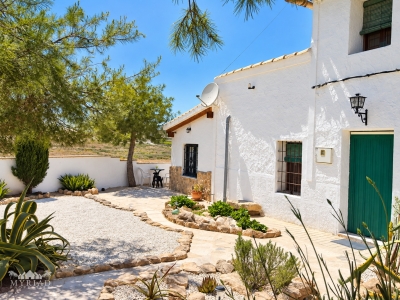
As part of our new series 'The History and Charm of Our Properties', the first property we are delving into is a real gem, and quite simply filled with important historic detail and charm.
Tucked away in the peaceful hills near Pinoso, La Bodega Antigua is more than just a home — it’s a piece of history. Once a traditional winery, this extraordinary property has been lovingly restored to preserve its character while offering all modern comforts. Whether you dream of a charming country retreat, a creative haven, or a boutique B&B (thanks to Murcia’s straightforward tourist licensing), this home offers it all.
We spoke to the present property owners to unravel the history of this very special home.... read on for the full and fascinating story of this incredible property.
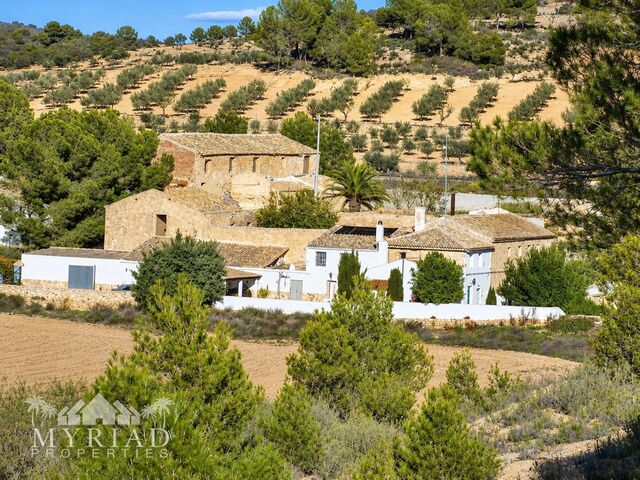
La Bodega Antigua - 'The Story of Our Home'
"There is something quite extraordinary about living in a house whose story reaches back at least 450 years.....
When we first came here, we knew we were buying an old country house. What we gradually discovered was that we were also becoming custodians of a small piece of local history. Our home stands beside the remains of the historic Venta de las Quebradas, on the old route between Yecla and Pinoso.
Today it is a wonderfully peaceful place, surrounded by countryside, but centuries ago this would have been a very different scene. Travellers passed along the road. Animals were watered. Grain was stored. Wine was kept in great barrels. Livestock moved across the land.
And right beside all of that stood the Venta".
Where the story begins — the 1500s
The existence of the Venta de las Quebradas can be traced back to the first half of the 16th century. A surviving record from 1575 refers to the Venta, although at that time it had not yet been given the name Las Quebradas. So when we say this place has centuries of history behind it, we really do mean centuries.
During the 1500s, Yecla and the surrounding countryside were growing rapidly.
The local population increased significantly, agriculture expanded and livestock became increasingly important. The roads crossing this landscape carried travellers, farmers and workers, horses and livestock, carts carrying goods and merchants moving between towns.
The Venta stood exactly where you would expect such an establishment to stand — beside a well-used route through the countryside.
It wasn’t simply a building. It was part of everyday life.
The 1600s — when the Venta really comes alive
By 1604, the historic records become much more detailed. At that time, the Venta belonged to the Florentín family, who leased it to other people to operate. In 1604, Juan Florentín leased the Venta to Francisco Martínez and Elvira Herrero for 1,200 reales a year. Twenty years later, in 1624, it was leased again.
This time, the agreement included not only the Venta itself, but also:
28 fanegas of land
A lavajo, or rainwater pond
Agricultural land surrounding the buildings
That is something we find particularly fascinating. This was never simply an inn....It was part of a much larger working rural estate, where hospitality, farming, water, livestock and agriculture all came together.
Travellers of every kind passed this way
The old roads around the Venta were used by people from every level of society. Historical records describe members of the Marqués de los Vélez travelling through this network of roads.
So we can imagine ordinary farmers, merchants and travellers passing by, but also members of prominent families and their entourages.
Then, in 1631, the Venta itself became the setting for celebrations. On 7 January that year, celebrations were held here for the wedding of the Corregidor of Villena, following his marriage in Murcia.
We sometimes stand outside and wonder what that evening must have looked like with guests arriving on horse back, laterns illuminating the night sky, voices of laughter and celebration, teh smell of local food and music filling the air.
It is strange and rather lovely to think that the quiet countryside around us once witnessed all of that.
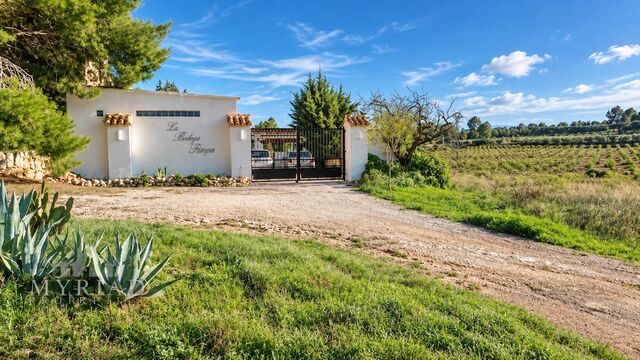
A working country estate — not simply a roadside inn
The more we have learned about the Venta, the more we have understood our own house. Nearby once stood the substantial country house of Pedro del Portillo y del Portillo and his daughter María. That house remained inhabited until around 1928 and included wine cellars and grain stores — bodegas and trojes.
Today, much of that property lies in ruins.
Our own house is not physically attached to the Venta, but it sits beside the surviving remains and appears to form part of this wider historic group of rural buildings.
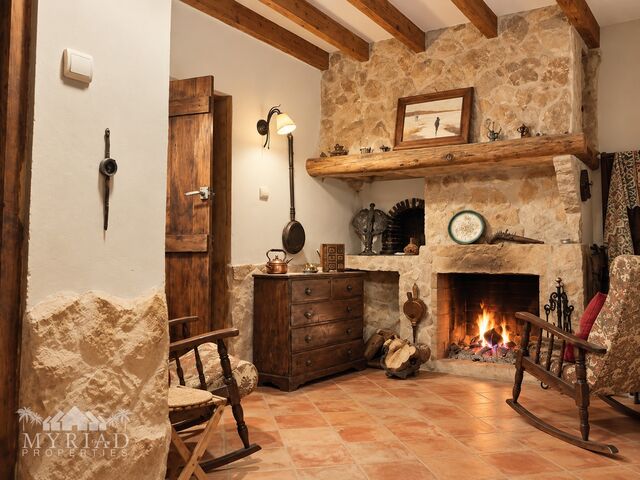
And inside our home, you can still see clues to the way people once lived here. The history is still inside our walls. This is probably the part of the story we love most.
We haven’t simply read about the agricultural history of the property. We can still see it.
Our bedroom once stored grain
What is now our master suite was once used for grain storage. I sometimes think about that when I wake up in the morning. A room that is now calm and comfortable was once a practical working space filled with the produce of the surrounding land.
My art studio once held wine barrels. This is perhaps my favourite transformation. The room where I now paint was once used to store the large wine barrels associated with the agricultural life of the property.....I love that.
A room that once smelled of wine and wood is now filled with paintings, canvases, brushes, colour and creativity.....
There is something very special about giving an old room a new purpose without erasing what it once was.
It would have been easy to remove everything and make the property feel completely new, but that was never what we wanted. Those little details are part of the story and they remind us that this was once a proper working rural property.
The old well, it's still working today!!! One of the most wonderful tactile surviving pieces of the past! And amazingly, we still use it to this very day.
In this dry landscape, water has always been incredibly valuable.
The wider Venta complex had an extraordinary historic water system. Nearby is a huge covered 15th-century aljibe, or cistern, measuring approximately 34 metres long, 6.2 metres wide and 5 metres deep. It had a capacity of around one million litres of water.
The cistern supplied water to the transhumant livestock travelling along the old routes through the countryside. So water has been part of this landscape for hundreds of years and the fact that our own well continues to function today somehow makes us feel connected to that story.
Living here today
When we became the owners of this house, we made a conscious decision; We did not want to erase its past. We wanted to live comfortably, of course, but we also wanted the house to remain recognisable as an old Spanish country home. So we have tried to preserve as much as possible and because of that, the old features still quietly tell their stories.
Every very old house seems to gather stories around it, ours is no exception. We have been told locally that a Marchioness built the inn and our house. There is also a wonderful story that a Pope once visited the chapel, we love hearing these stories!
But it is important to us to be clear that, at the moment, they remain local tradition rather than documented historical fact.....And perhaps that is part of the charm...Some parts of the history can be proven through documents, other parts survive through generations of stories.
Old house somehow holds both.
La Bodgea Antigua - More than simply an old house
The old walls tell another kind of story, they tell us how people lived and that is what makes this house so special to us. After more than four centuries, we are not simply living in an old property. We are living beside — and within — a surviving piece of the history of the Venta de las Quebradas.
We have tried to respect that and we have tried to preserve it. And, more than anything, we have tried to keep its story alive.
But now it is time for new faces and new voices to fill this home. As we move on to our new adventure, our beautiful and special home is looking forward to starting it's new chapter, with new faces and new memories to be made. "
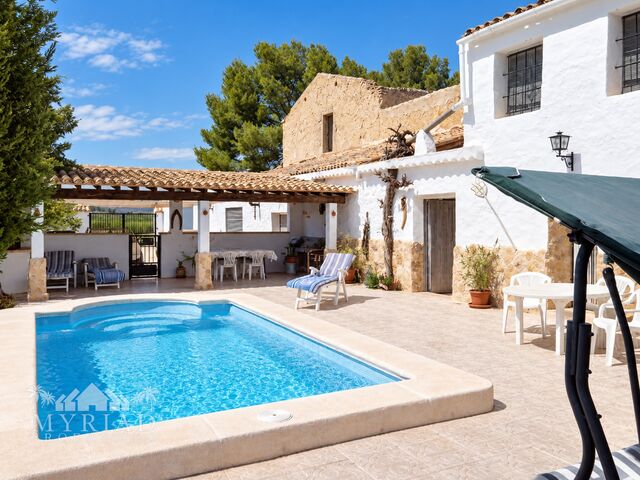

In and around the Pinoso area groups of cyclists are seen most weekends. Heads down giving it their all as they whizz through the countryside. Up and down hills in the pursuit of their sport. And it’s taken very seriously.
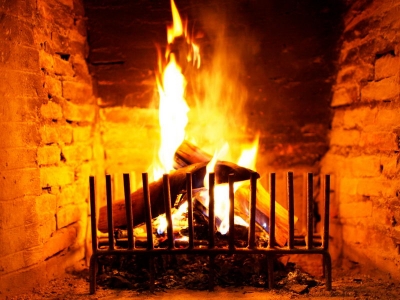
While Spain in the Winter is warmer than the UK temperatures do still drop below zero. The days are generally sunny but when the sun goes down evenings can be cold. So from November to March you will probably need to have some form of heating.

Fortunately, Spain consistently tops tables as far as healthy places to live. Did you know Spain has the highest life expectancy of all countries in Europe.
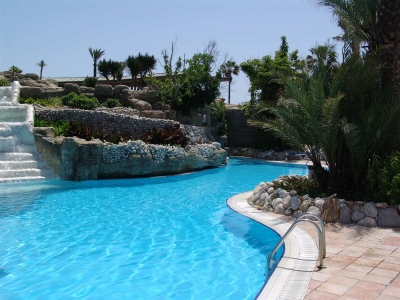
Keeping your pool sparkling clean doesn’t have to be as cumbersome as you might think. All pools are different, and so are their maintenance needs. However, they all share one commonality: The secret to pristine pool health is regular, routine care. If you choose to handle common problems like murky water or broken pumps on your own, make sure to always consult manufacturers’ manuals before fixing or using equipment.
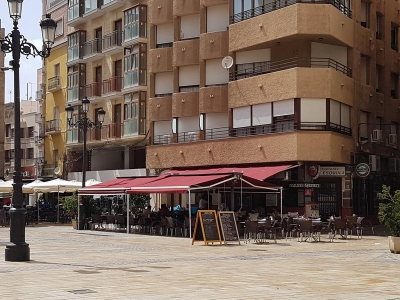
Moving to a new country, away from what you have know, can be scary. Getting involved in the local community can be even more of a challenge. Here’s some tips you might find useful.

Spain is a wonderful country where strong family values are still evident. So when there is a public holiday families come together to celebrate.
Many of those holidays relate to Saints Days.
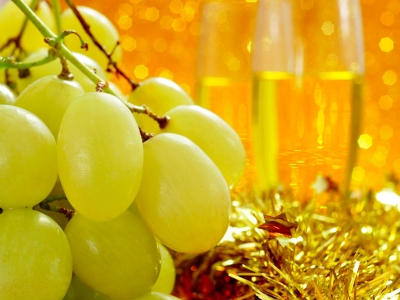
If you were lucky enough to be in Spain over New Year you will no doubt have had a great time as the country loves to party.
For those who have yet to experience a Spanish New Year, here’s a couple of the local traditions to give you a flavour of what you missed.
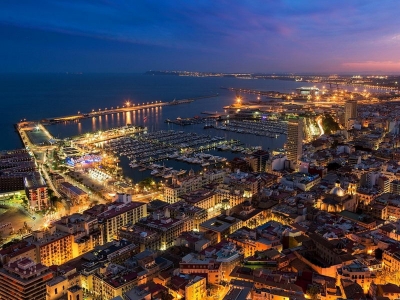
Abanilla
Built on the lower slopes of the mountain El Zulum, some of the streets are so very steep and Abanilla enjoys views across the fertile landscape towards the Sierra de la Pila National Park. The town is a labyrinth of narrow streets connecting to the picturesque squares with their fountains and monuments.

On the evening of 5 January all over Spain local communities come together to celebrate the arrival of the the Three Kings to present their gifts to the baby Jesus in Bethlehem
This year we were in Pinoso to see the procession.